Compliance
Part of Native ad headline testing
Detecting clickbait that damages post-click engagement
Clickbait becomes an operational problem when a headline attracts a click by setting an expectation the destination does not meet.
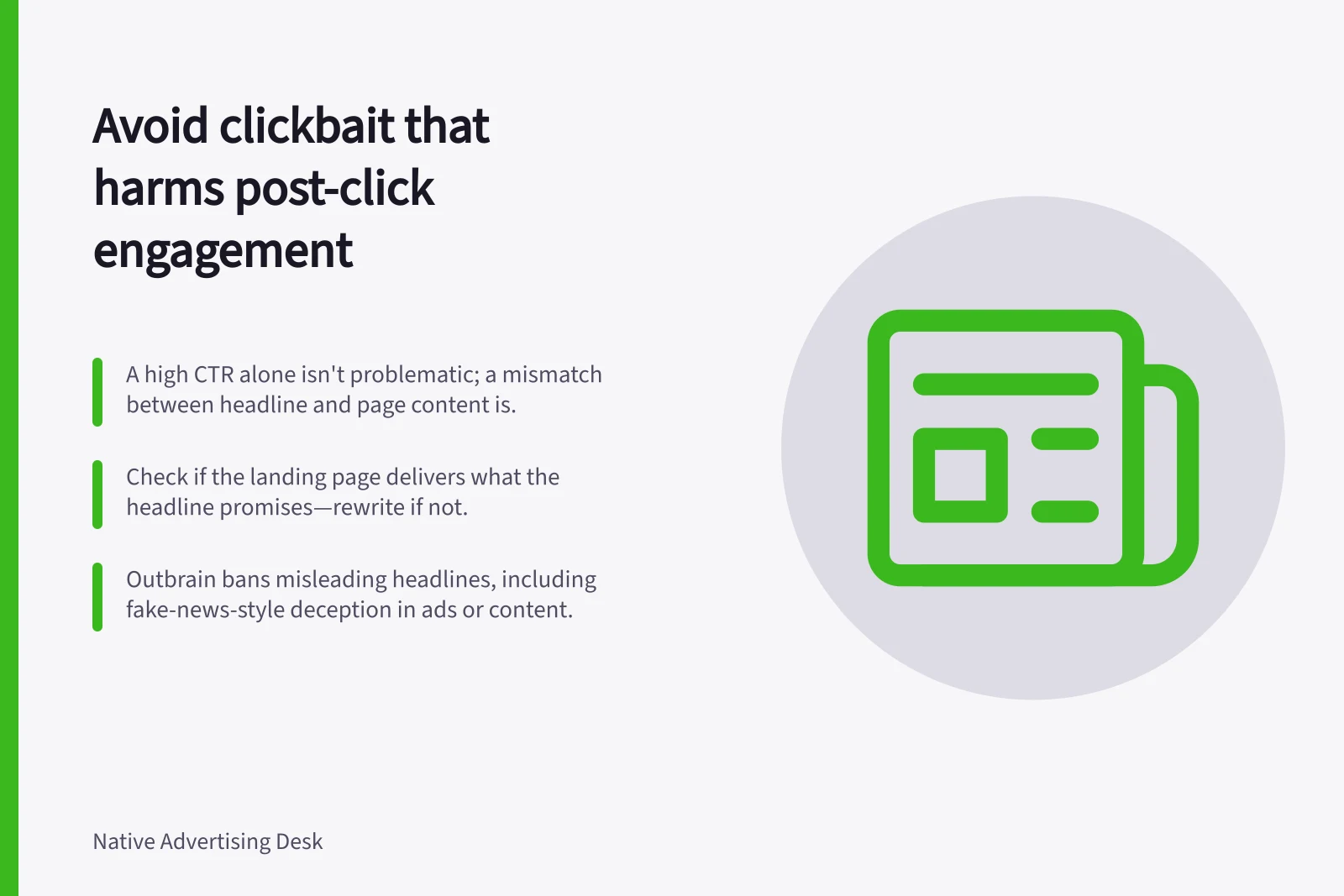
Clickbait becomes an operational problem when a headline draws a click by setting an expectation the destination does not meet. A high CTR by itself is not the warning sign. The warning sign is a gap between the headline's promise and what readers do or find after arriving.
Compare the promise with the page
Read the headline without the image and ask what answer, offer or reveal a reasonable reader would expect. Open the landing page on a phone and find that answer. If it is absent, obscured or materially narrower, rewrite the headline or the page before spending more. This is also a compliance issue on networks whose policies prohibit misleading headlines.
Examine engaged visits, scroll or content consumption where measured, and the intended next action. A variant with more clicks but sharply fewer qualified actions may be pulling in the wrong people. Check page speed, redirects and tracking first: a technical fault can mimic disappointed visitors. Compare like-for-like placements and audience segments so a traffic-mix shift does not masquerade as a copy effect.
Outbrain's guidelines identify as prohibited fake-news sites that intentionally deceive readers. That includes content designed to make an advert, propaganda or a hoax appear to be legitimate editorial content or fact-based news.
Use that as a floor, then apply a stronger editorial test: would a reader feel the headline described the page fairly after reading it? If the answer is no, remove the variant even if it has a low cost per click.
Retest a specific, truthful replacement against the original informative baseline. Judge success by useful post-click behaviour and media efficiency. A headline that filters out the wrong visitor can improve the campaign even when it attracts fewer clicks.
Headline Promise vs. Page Content: Key Differences That Damage Engagement
- Headline PromisesA clear answer, reveal, or offer (e.g., 'You won’t believe what happened next…')
- Actual Page ContentVague information, minimal insight, or content that does not deliver on the promise
- User ExpectationReader expects a specific revelation or solution based on headline
- Post-Click BehaviourHigh bounce rate, low scroll depth, no action taken (e.g., sign-up, purchase)
Impact of Clickbait on User Engagement: Key Findings
- High CTR with Low Post-Click Engagement
- Common in clickbait; indicates mismatch between headline and content
- Misleading Headlines on Ad Networks
- Prohibited by Outbrain; includes fake-news-style deception
- User Trust Erosion
- Repeated exposure reduces long-term brand credibility
- Technical Issues Mimicking Disappointment
- Page speed, redirects, or tracking errors can skew engagement data