Creative Formats
Part of Optimising a native advertising campaign
Pausing a creative that attracts the wrong readers
Check the creative's promise and post-click behaviour, then pause an inaccurate or persistently weak variant with a clear record.
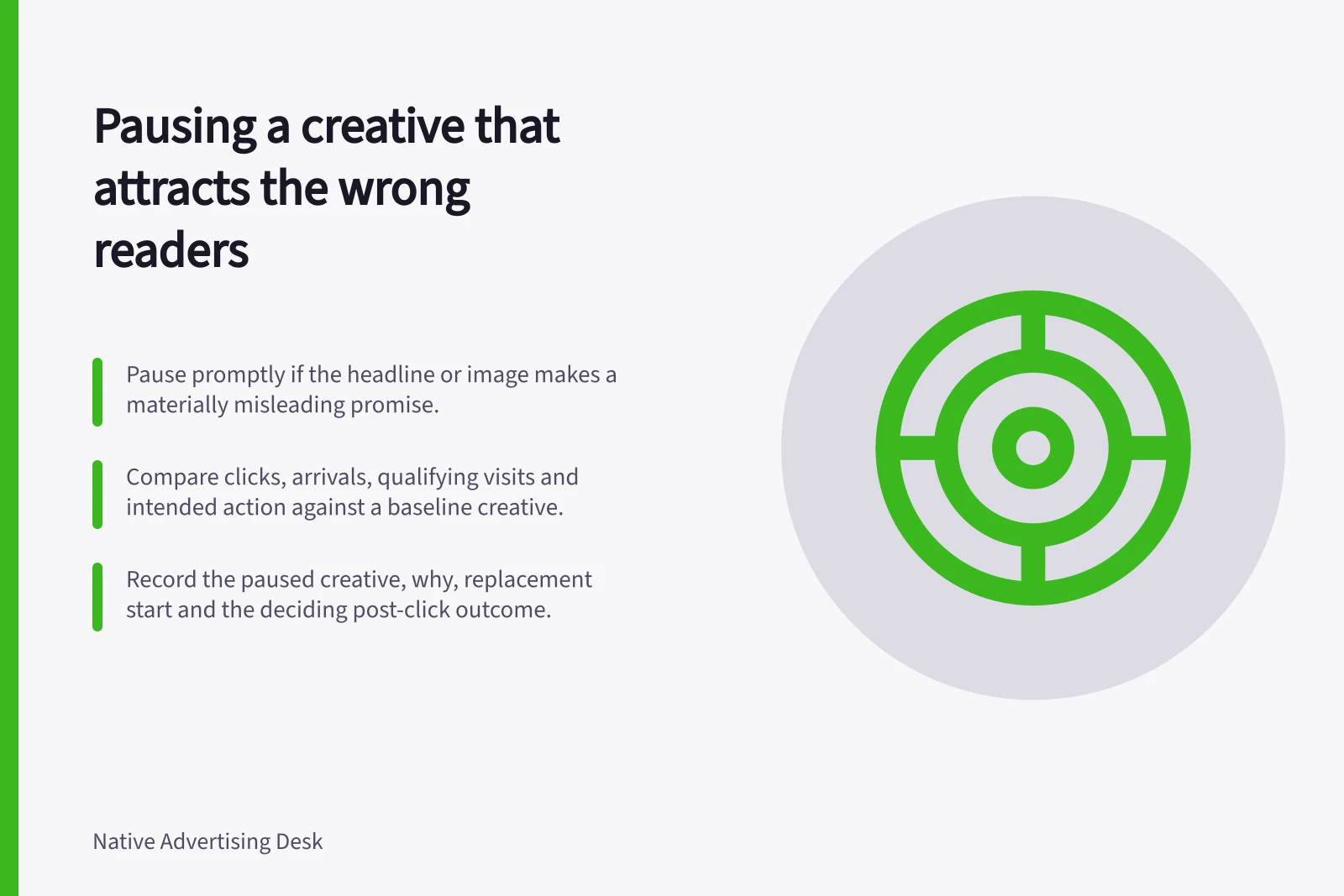
Pause a native creative promptly if its headline or image makes a materially misleading promise.
When the promise is accurate but the creative appears to attract the wrong audience, check comparable post-click results before making a performance-based pause. A strong click-through rate does not settle either question.
Identify the creative and its promise
Review the suspect ad separately from the campaign total. Use the buying account’s ad-level report and delivery control to check and pause the individual creative.
Record the exact headline, image, destination and delivery dates. Read the card as a reader would, then open the page. What answer, audience or result does the card suggest, and where does the page deliver it?
An image can add an implication the words do not state. The ACCC can require businesses to back up claims they make about their products or services. Outbrain’s guidelines identify sites that intentionally deceive readers into believing something untrue. They also cover content designed to deceive readers into believing they are reading legitimate editorial content or fact-based news.
If the promised answer is absent or the main impression goes beyond what the page supports, pause the affected creative while correcting the card or destination. A favourable click figure does not justify an inaccurate promise.
Check a performance-based pause
If the card fairly describes the page, compare it with a suitable baseline creative on the same destination and similar placements, devices and dates. Put reported clicks, recorded arrivals, qualifying article visits and the intended action side by side. A gap between platform clicks and analytics sessions can occur; it does not by itself establish that readers were unsuitable.
Check loading, campaign tags and the destination’s opening before blaming the creative. Then ask whether this version repeatedly brings fewer useful visits or eligible actions than the comparable version. Keep counts beside rates. A few disappointing visits may be too little evidence for a persistent pattern.
| Finding | Decision to consider |
|---|---|
| The card promises an answer the page lacks | Pause and correct the card or destination. |
| The promise is accurate but the page fails across sources | Repair the page or tracking first. |
| Comparable traffic from this creative repeatedly produces fewer useful visits | Pause it and retain the better-matched version while developing a replacement. |
| The sample is small or traffic mixes differ | Keep the result provisional and gather comparable evidence, subject to spend limits. |
Deciding whether to pause a native creative
- Read the card as a reader would, then open the page
- Check whether the promised answer, audience or result appears on the page
- If the promise is misleading, pause the affected creative and correct the card or destination
- If the promise is accurate, compare it with a baseline creative on the same destination, devices and dates
- Rule out loading, campaign tags and the destination's opening before blaming the creative
- Pause only when comparable traffic repeatedly brings fewer useful visits or eligible actions
- Record the pause, the replacement and the post-click outcome that will decide whether it stays
Finding and the decision it supports
- The card promises an answer the page lacksPause and correct the card or destination.
- The promise is accurate but the page fails across sourcesRepair the page or tracking first.
- Comparable traffic from this creative repeatedly produces fewer useful visitsPause it and retain the better-matched version while developing a replacement.
- The sample is small or traffic mixes differKeep the result provisional and gather comparable evidence, subject to spend limits.
Record the pause and replacement
Give the replacement a clear invitation to the answer the page actually provides. Review its image and source name with the headline. If the destination changes, recheck the pairing. Record which creative was paused, why, when the replacement began and which post-click outcome will decide whether it stays.
Use the buying account’s delivery control to stop the selected ad. Check the supplier’s account-level behaviour and reporting when reconciling clicks after the change.
What to record when you pause a creative
- Which creative was paused
- Why it was paused
- When the replacement began
- Which post-click outcome will decide whether the replacement stays
- Recheck the pairing if the destination changes