Sponsored Editorial
Part of Native advertising strategy for publishers and brands
Native advertising versus earned editorial coverage
See how paid native content and earned editorial coverage differ in control, timing, reader disclosure and what a brand can expect.
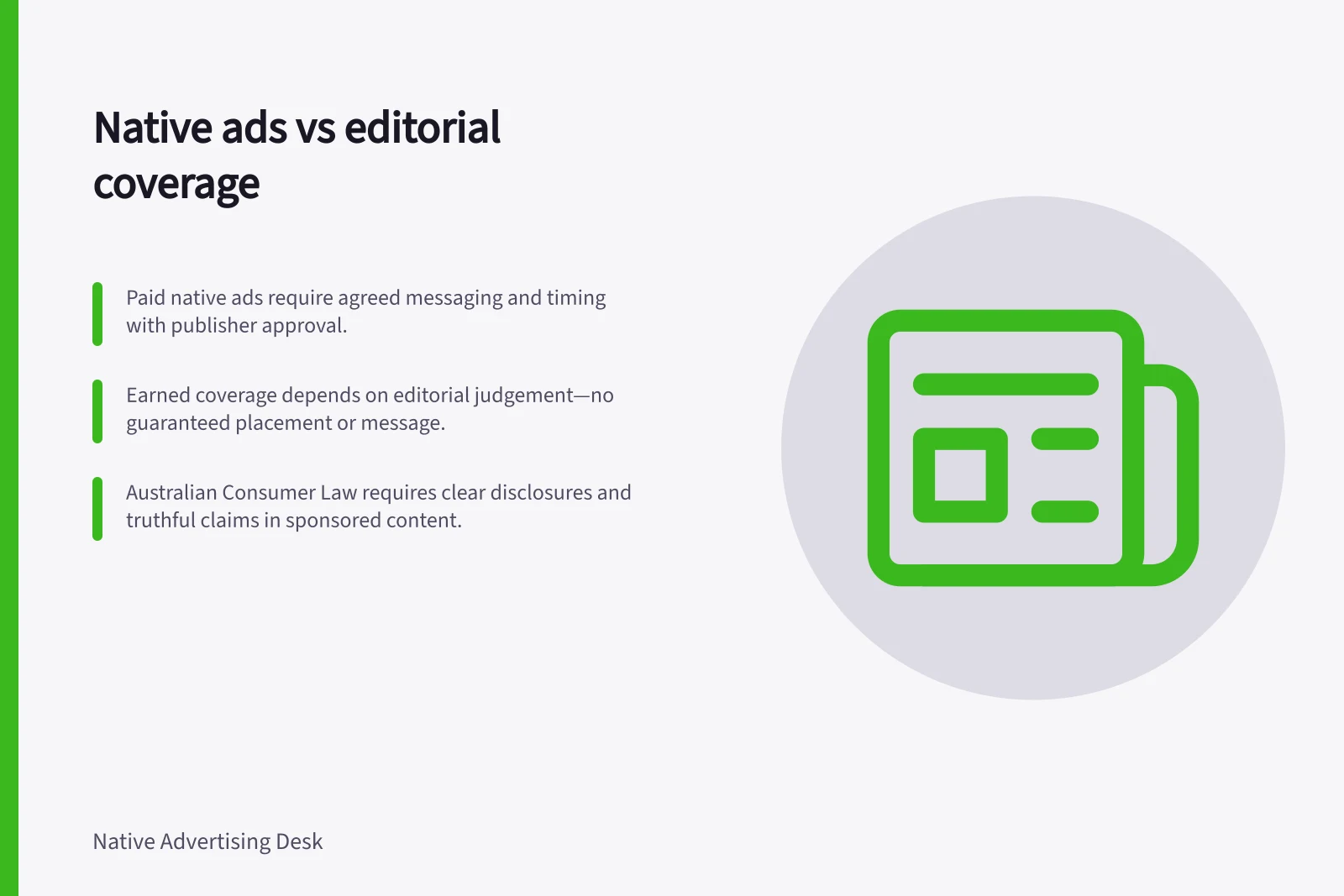
Native advertising is a paid commercial placement or piece of content. Earned editorial coverage is a publisher’s independent decision to report a story.
A brand can pitch an editor, but buying advertising does not buy the editor’s judgement, a favourable article or a promise of coverage.
If a brand needs agreed timing, a defined product explanation or review of its commercial message, it should discuss an advertising arrangement. If it has information that may be newsworthy and can accept independent framing or refusal, an editorial pitch may be appropriate.
Compare what each route allows
| Question | Native advertising | Earned editorial coverage |
|---|---|---|
| Who decides whether it runs? | The parties agree deliverables, subject to the publisher’s terms and review. | The editorial team decides whether there is a story. |
| Can the brand specify the message? | The agreed brief can specify a commercial message; claims still need support. | A pitch can offer facts and access but cannot require wording or a positive angle. |
| Is timing assured? | Only if dates are committed in the agreement. | Publication and timing remain editorial decisions. |
| How should readers understand it? | Its commercial nature should be clear where readers encounter it. | It should stand on editorial judgement, with conflicts handled under the publisher’s rules. |
| What can be measured? | Agreed delivery and campaign actions can be tracked. | Coverage can be recorded, but its effect cannot be assumed from publication alone. |
Publisher contracts and newsroom processes vary. Check the actual terms before making promises to stakeholders.
Treat an editorial pitch as an editorial decision
A useful pitch offers verifiable information, relevant people and a reason the publication’s readers may care. An editor may investigate, seek other views, change the focus, delay the story or decline it. Asking to approve the full article or remove an inconvenient fact is inconsistent with the independent role the brand is seeking.
The MEAA Journalist Code of Ethics tells members working in journalism not to let advertising or other commercial considerations undermine accuracy, fairness or independence. The code sets standards for MEAA members engaged in journalism.
Agree the paid arrangement clearly
When the message is the deliverable, specify what the publisher will create, where it will appear, the sponsor’s review rights and what happens if a claim lacks support. A sponsor can check facts about its own product without making the result independent reporting.
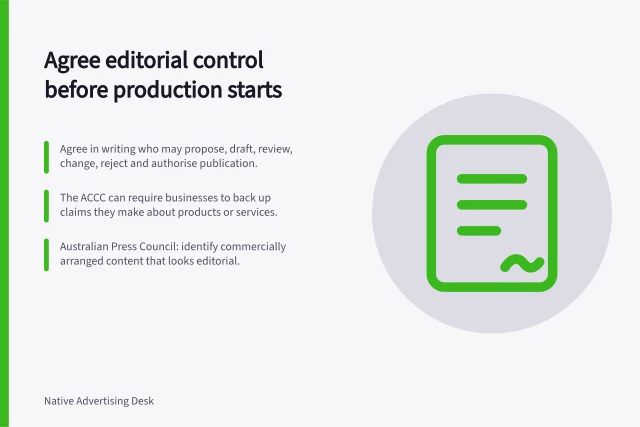
Review the teaser as well as the destination. If a paid item resembles news, readers should be able to recognise its commercial nature when they encounter it. Australian consumer guidance says the ACCC can require businesses to back up claims about their products or services, and that under the Australian Consumer Law businesses must not mislead or deceive consumers. The ACCC has also raised concerns about hidden advertising and inadequate disclosures in sponsored posts.
A team may use both routes for different purposes: an independent pitch for newsworthy information and a clearly identified paid explanation for a question the brand wants to answer. Keep the promises and reports separate. Earned coverage is an editorial outcome; paid delivery is assessed against its agreement.
Key regulatory guidance for Australian brands
- ACCC requirement for claim supportBusinesses must back up claims about products or services under Australian Consumer Law.
- Disclosure of sponsored contentACCC warns against hidden advertising and inadequate disclosures in sponsored posts.
- Journalist independence standardsMEAA Code of Ethics prohibits letting commercial interests undermine accuracy or fairness.
- Publisher integrity guidelinesPress Council principles require conflict management and editorial independence.