Creative Formats
Part of Native ad creative and landing pages
Designing a landing page for readers rather than instant buyers
Structure a native ad destination so readers find the promised answer, recognise its commercial role and can take a suitable next step.
When a native ad invites someone to read an explanation, make the landing page deliver that explanation first. Confirm the topic on arrival, make the answer easy to find and offer a next step that fits what the reader has learned. A sales action can be visible without replacing the answer the ad promised.
Answer the arrival question
Write down the question a visitor is likely to bring from the headline. If an ad offers “questions to ask before changing a business phone plan”, the page should present and explain those questions. A sales-call form before any useful answer would break that particular promise.
A practical page sequence is:
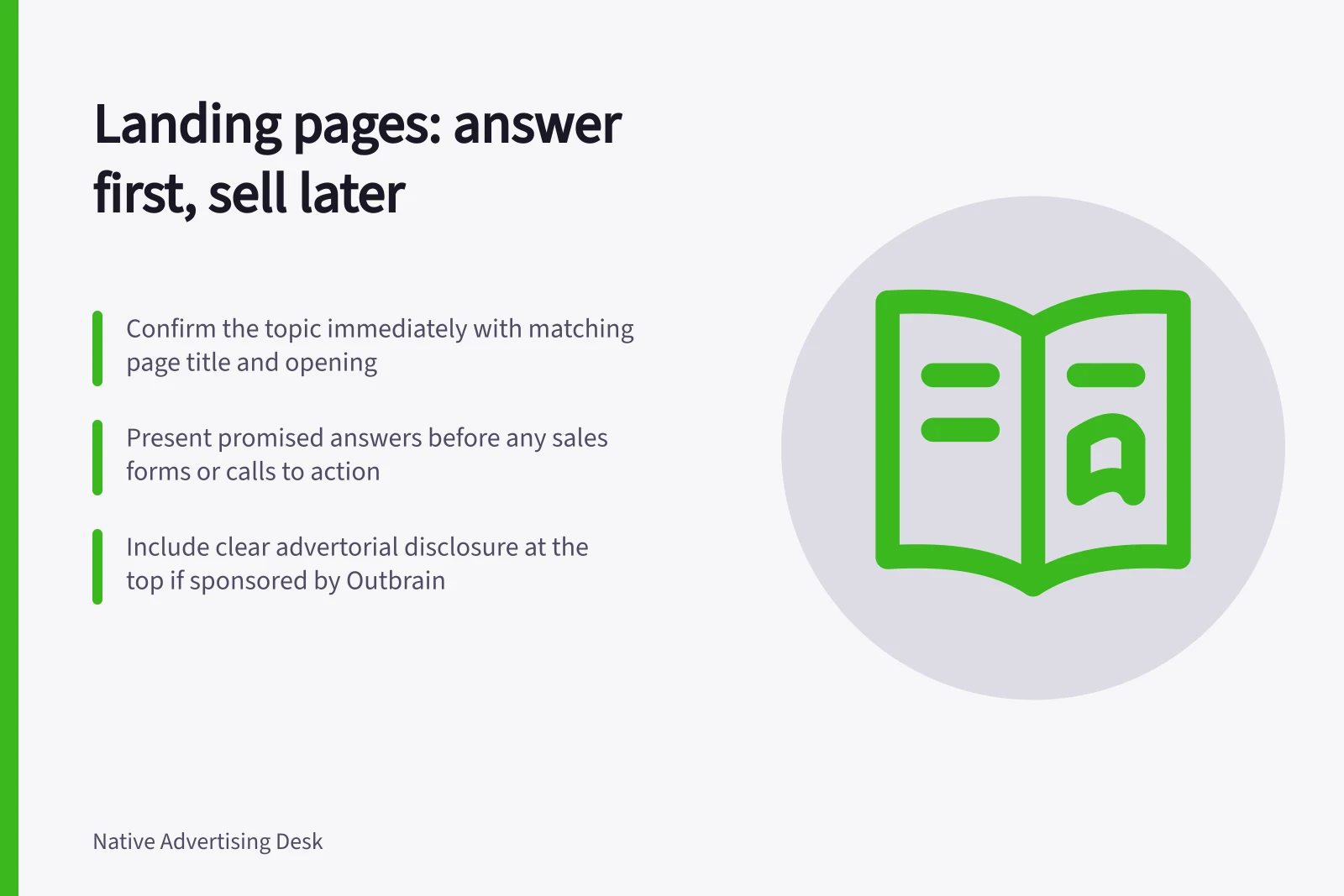
- Confirm the topic.Match the page title and opening to the ad’s subject and audience.
- Give the answer.Present the promised factors, steps or trade-offs where a visitor can find them readily.
- Explain material limits.Put conditions and assumptions beside the claims they affect.
- Offer a next step.Let readers explore relevant product details or make an enquiry after they have enough context.
Use headings that describe the sections they introduce. This page structure alone does not establish accessibility conformance.
Show the commercial role
If the destination is a sponsored explanation, make its commercial character clear on arrival. Outbrain’s review guidance calls for clear advertorial disclosure at the top of the page when the landing page is an advertisement. Check the publisher’s and distributor’s requirements for the actual format.
Support factual product claims and place important qualifications where readers will see them. The ACCC can require businesses to back up claims they make about their products or services.
Balancing Commercial Disclosure with Reader Experience
- Pros
- Clear advertorial disclosure builds trust and complies with ACCC and AANA guidelines.
- Cons
- Overly prominent commercial labels may distract readers from the promised content.
Key Regulatory & Industry Standards for Australian Native Ads
- ACCC Compliance
- Businesses must substantiate claims about products/services.
- AANA Code of Ethics
- Requires clear disclosure of commercial intent in sponsored content.
- Outbrain Guidelines
- Mandates clear advertorial disclosure at the top of the page.
Review the page on a phone
Check that the opening is readable, the promised answer is easy to reach, and a pop-up does not obscure it. Follow the navigation and any form or next-action link.
If Outbrain is the distributor, its review guidance calls for a functional page, access to a privacy policy and a Contact Us section with an actual email address, phone number or physical address. These are Outbrain-specific checks, not a universal landing-page specification.
Choose the final action to suit the answer. A comparison page might lead to detailed specifications; an introductory guide might lead to a fuller explanation. The page has done its first job when readers can get the information that brought them there.
Outbrain Landing Page Requirements (Distributor Guidelines)
- Functional pagePage must work without errors on all devices.
- Privacy policy accessMust be easily accessible from the landing page.
- Contact informationInclude an actual email address, phone number or physical address in the Contact Us section.