Compliance
Evaluating placement transparency in a native ad platform
Check sample placement reports, decode publisher and platform labels, and identify what a native ad report cannot verify.
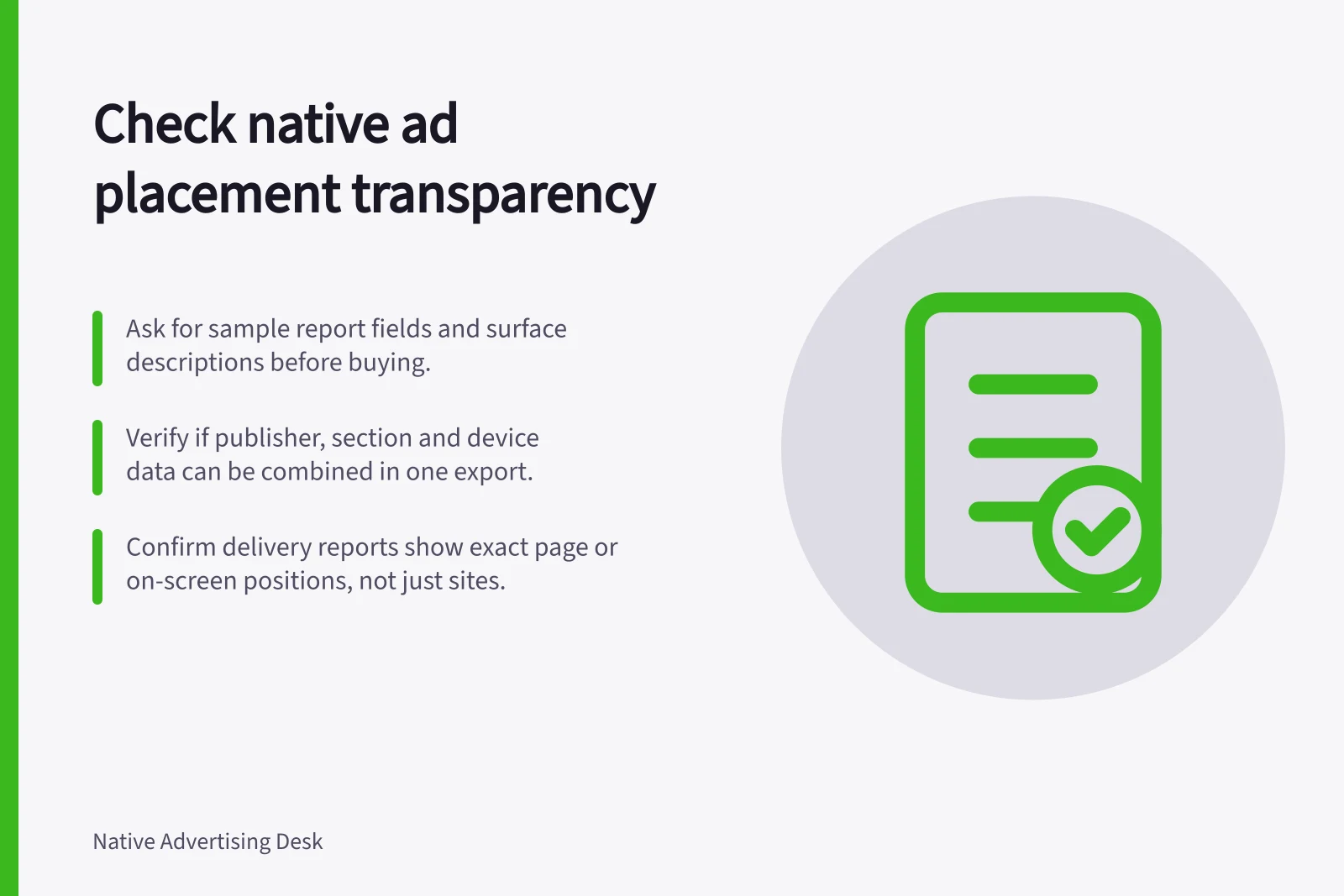
Before buying, check whether a native ad platform can explain its placement labels and show where delivery will be reported. Ask for sample fields and surface descriptions. A publisher name may not reveal the article page, app screen, newsletter or position where a promotion appears. Actual delivery can only be checked after the campaign runs.
Separate three kinds of evidence
| Evidence | Request | Limit |
|---|---|---|
| Possible inventory | An account and campaign-specific explanation of proposed sites and surfaces. | It does not prove future delivery. |
| Delivery report | The lowest available site, section, surface and date breakdown, with definitions. | A site row may not identify the exact page or position. |
| Reader experience | A current preview or dated example of each important surface. | One example cannot show how often it was served. |
Ask which fields are available in your account, which require a separate request and which are unavailable. Also ask whether the dimensions you need can appear together in one export.
Decode the vendor’s labels
Ask the supplier which publisher and section reporting views are available, and what each represents.
Ask what an unfamiliar section or platform label represents before describing it as an article-page placement. Confirm which dimensions can appear together in the proposed report rather than assuming that every view can be combined.
Taboola documents a site_breakdown for publishers on which campaigns have run. That provides site-level evidence, but the documented field alone does not identify a page or on-screen position. Its separate possible-publisher list includes blocked publishers and shows neither delivery nor the campaign’s usable inventory. Ask what additional detail the proposed account can supply.
A direct publisher agreement can identify a surface precisely if it names the publication, format, device treatment and dates. Request a delivery report tied to each booked item. A screenshot can illustrate an appearance but cannot establish delivered volume.
Try a sample reporting exercise
Ask the supplier to show an example row for each proposed surface and explain what a buyer could learn from it. For each row, identify the publisher or property, the section or environment, the known format or position, the date and device breakdown, and any available change controls. Record what the row leaves unknown.
For a newsletter or app environment without its own webpage, request a clear surface description rather than an invented page URL. If the campaign is sold on a particular article context, require that context in the agreement and evidence capable of checking it.
For a broader traffic buy, site and section reporting may be sufficient if the labels and gaps are clear. Choose the reporting threshold that supports the placement decision you need to make.